
The good news: getting off the waitlist is possible. The difficult truth: it depends far more on institutional factors than on how hard you push. This guide walks through every step you need to take — and the mistakes to avoid — so you're positioned as well as possible if a seat opens up.
Key Takeaways
- Being waitlisted means the college views you as qualified but has no space yet — the decision isn't final
- Confirm your waitlist spot immediately, then send a Letter of Continued Interest within 1–2 weeks
- Pay your deposit at an accepted school by the deadline (May 1 for US schools) — never count solely on the waitlist
- Send one focused update — contacting admissions offices repeatedly hurts your chances
- Most waitlist movement happens between May 1 and late June — stay ready to decide quickly
What Does Being Waitlisted Actually Mean?
Colleges use waitlists as an enrollment management tool. When admitted students decline their offers after May 1, schools pull from the waitlist to fill those seats. How many seats open — and when — varies enormously by school and by year.
According to a 2019 NACAC State of College Admission report, colleges admitted an average of 20% of students who opted to remain on their waitlists — but at the most selective schools, that figure dropped to just 7%. And even those averages obscure the real volatility.
MIT's own Common Data Set tells the clearest story:
| Cycle | Waitlisted | Accepted Spot | Admitted from Waitlist |
|---|---|---|---|
| 2021–22 | 632 | 501 | 25 |
| 2022–23 | 763 | 682 | 0 |
| 2023–24 | 619 | 558 | 32 |
| 2024–25 | 590 | 509 | 9 |
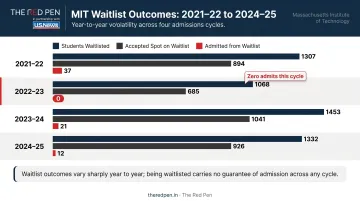
That swing from 32 admits to zero and back is not unusual. It reflects one reality: the number of seats available on any given year's waitlist is entirely determined by how many admitted students decline their offers — something outside your control.
What you can control is how you respond. The school already considers you qualified — a waitlist placement is a genuine indication of fit, not a soft rejection. Whether you move off it depends on institutional factors like yield rates, class composition goals, and geographic balance. That's exactly why your post-waitlist strategy matters: it's your only lever in an otherwise unpredictable process.
How to Get Off the College Waitlist: Step-by-Step
Step 1: Formally Accept Your Spot
Most colleges require you to actively opt in to the waitlist. If you don't confirm, you're automatically removed from consideration. Do this within 24–48 hours of receiving the decision — don't wait.
Step 2: Write a Compelling Letter of Continued Interest (LOCI)
A LOCI is a concise letter (under 300–400 words) that does two things: reaffirms your commitment to enroll if admitted, and explains specifically why this school is the right fit for you.
What a strong LOCI includes:
- References specific programmes, faculty, research opportunities, or campus culture unique to that institution
- Shows how you'd contribute — not just what you've done
- Ends with an unambiguous statement of enrollment intent
What a strong LOCI includes:
- References specific programmes, faculty, research opportunities, or campus culture unique to that institution
- Shows how you'd contribute — not just what you've done
- Ends with an unambiguous statement of enrollment intent
Common LOCI mistakes to avoid:
- Generic compliments ("This has always been my dream school")
- Rehashing your original application
- Listing achievements without connecting them to the school
One important caveat: LOCI rules vary by school. Johns Hopkins allows a one-page letter of interest; Tufts uses a Waitlist Reply Form instead. MIT explicitly says not to send additional documents, and Georgia Tech redirects students to an official reply form entirely.
Always check each school's specific instructions before sending anything.
If you're unsure how to frame your story for a specific school, The Red Pen's Post-Submission Strategy service helps students navigate exactly this — writing a targeted LOCI that stays within each school's guidelines.
Step 3: Share Meaningful New Updates
Include genuinely new information only — a significant award, a notable project, a meaningful grade improvement since your original application was submitted. This is not the place to recap what admissions already has. Keep it brief; integrate it into your LOCI or submit it as a short addendum if the school permits one.
Step 4: Coordinate a School Counsellor Advocacy Call
A direct call from your high school counsellor to the regional admissions representative can strengthen your case. Brief your counsellor using your own LOCI as a reference — they should speak to your specific reasons for wanting to attend, not just offer generic praise.
Step 5: Pay Your Deposit at an Accepted School Before May 1
This is non-negotiable. Secure your place at another college by May 1, regardless of your waitlist status. Missing this deadline to "wait and see" risks being left without any placement at all. Paying a deposit elsewhere does not disqualify you from the waitlist.
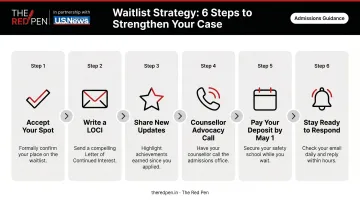
Step 6: Stay Informed and Be Ready to Respond Fast
Waitlist offers can arrive anytime from May through late July — sometimes as phone calls. Before that call comes, make sure you've:
- Kept your phone accessible and are checking email daily
- Discussed with your family whether you'd accept an offer
- Worked through any financial considerations in advance
What Factors Affect Your Waitlist Chances?
Understanding what drives waitlist movement helps set realistic expectations.
Yield and Enrollment Gaps
The single biggest factor is how many admitted students decline their offers after May 1. Vanderbilt has admitted waitlisted students every year for over 30 years — over the last five years, an average of 10% of its enrolling class came from the waitlist. In contrast, MIT admitted zero waitlisted students in 2022–23. No strategic action on your part can manufacture a missing seat.
Class Composition Needs
Colleges use the waitlist to fill specific gaps. If a school is short on engineering applicants or students from a particular region, candidates matching those profiles have a natural advantage. WashU explicitly notes that available spaces depend on enrollment numbers across its five undergraduate divisions. If your profile happens to align with what the school needs, your chances improve meaningfully.
Demonstrated Interest
NACAC's Fall 2023 factors data shows that 15.7% of colleges rated student interest as considerably important and 27.6% as moderately important. This varies sharply by institution, though — MIT and Johns Hopkins both state they do not track demonstrated interest during the waitlist process.
Treat demonstrated interest as a meaningful factor only when the school provides a formal mechanism for it, such as a reply form.
Ranked vs. Unranked Waitlists
Most major selective universities maintain unranked waitlists, including:
- MIT
- Johns Hopkins
- Georgia Tech
- WashU
- Vanderbilt
- Carnegie Mellon
There is no queue. When space opens, the admissions office reviews active candidates holistically based on current class needs. You can ask your admissions office whether the list is ranked — at most schools, it isn't.
Common Mistakes That Hurt Your Waitlist Chances
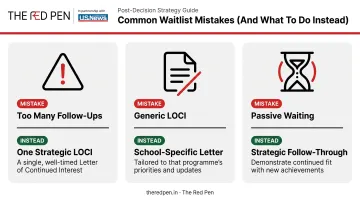
Most waitlisted students either do too much or too little. Here are the three mistakes that most reliably hurt your chances:
- Sending too many follow-ups. MIT warns against bombarding the admissions office, flying to campus, or being pushy. Johns Hopkins specifically cautions against extra recommendation letters, writing samples, or portfolios. One well-crafted LOCI, one counsellor advocacy call, and one meaningful update is the right level of contact at virtually every school.
- Writing a generic LOCI. A letter that lists achievements, repeats application content, or offers vague compliments adds nothing new. It signals you haven't thought carefully about why this school is the right fit for you specifically. Specificity is the only thing that makes a LOCI worth reading.
- Waiting passively. Confirming your spot and doing nothing else is the most common mistake on this list. You can't create a seat, but you can stand out from the other waitlisted students who didn't bother to follow up strategically.
What to Do If the Waitlist Doesn't Work Out
Most students who feel disappointed by their initial placement ultimately thrive at the school they did get into. That's not a consolation — it's what the data shows. A few practical steps:
- Visit your backup school again with fresh eyes, attend admitted student events, and connect with future classmates. Full investment in that community starts now.
- Withdraw from waitlists at schools you wouldn't actually attend. It's the ethical move, and it frees up a spot for another student in the same position.
- Explore a gap year or reapplication only if you're set on a specific institution and couldn't gain admission through any channel. A well-planned gap year with a stronger profile is a real option — and a counsellor at The Red Pen can help you decide whether it makes sense before you commit.
Frequently Asked Questions
How likely is it to get off the waitlist for college?
Nationally, NACAC data puts the average at 20% of students who opt to remain on waitlists — but just 7% at the most selective colleges. School-specific rates vary wildly year to year, so always check the Common Data Set (Section C) for the specific institution you're waiting on.
Is it good or bad to be waitlisted?
Being waitlisted is a positive signal — the college considers you qualified and a potential fit. It means the class is currently full, not that you were rejected. What happens next depends on whether enrolled students decline their offers after May 1, creating space for waitlisted candidates.
What is a Letter of Continued Interest and how long should it be?
A LOCI is a letter to the admissions office reaffirming your intent to enroll and explaining specifically why this school is the right fit. Keep it under 300–400 words — focused, personal, and free of generic praise or application recap.
Do colleges rank their waitlists?
Most major selective universities maintain unranked waitlists and review candidates holistically when space opens. Contact the admissions office directly to confirm the practice at your specific school.
Can international students receive financial aid if admitted off the waitlist?
Policies vary widely. A handful of schools — including MIT, Vanderbilt, and Brown — extend financial aid commitments to international waitlist admits who applied on time. Most institutions do not, so confirm the school's policy directly before committing to stay active on the list.
When do colleges notify students about waitlist decisions?
Most movement happens between May 1 and late June, though offers can extend into July or even August in rare cases. NACAC's ethical guidelines set August 1 as the final date for notifying waitlisted candidates of a final decision.